A sink that drains slowly is an annoyance. A shower that fills with dirty water every time someone flushes is a different problem entirely. Both start the same way, with something narrowing a pipe, but the fix depends on where that narrowing is and what caused it.
Good drain cleaning in Yuma comes down to two things: clearing the line with the right tool, and finding out why it closed in the first place. A drain that clogs three times in a year is not suffering from bad luck. It is telling you something about the condition of the pipe. Yuma Plumbing Pros can connect you with a plumber who clears the blockage and, when the pattern calls for it, puts a camera down the line to see what is really there.
One Fixture or the Whole House? Reading the Symptoms
Before anyone picks up a tool, the symptoms tell you a lot about where the problem sits.
- A single slow sink, tub, or shower. The clog is in that fixture’s trap or branch line. Hair and soap in bathrooms, grease and food in kitchens.
- Several fixtures in one room acting up. A shared branch line is narrowing, often where a bathroom group ties into the main.
- Gurgling toilets when the washer drains. Air is being pulled through traps because the line downstream cannot carry the flow.
- Water rising in a tub or floor drain when you flush. The main lateral is blocked downstream of everything. Stop using water and call, at any hour.
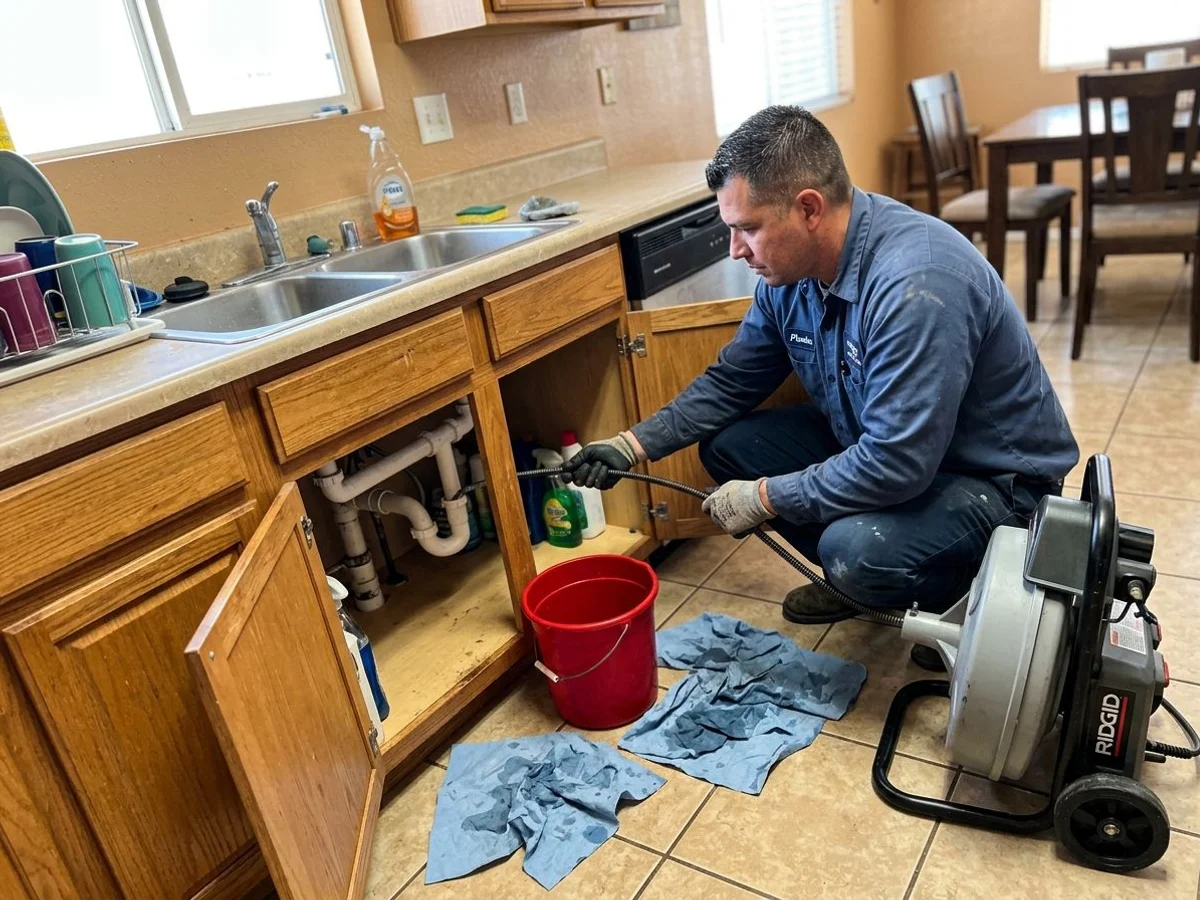
Sorting this out on the phone means the plumber brings the right machine. A hand auger will not touch a root-filled main, and a large drum machine is overkill for a hair clog.
Cable or Hydro Jet: Matching the Method to the Fouling
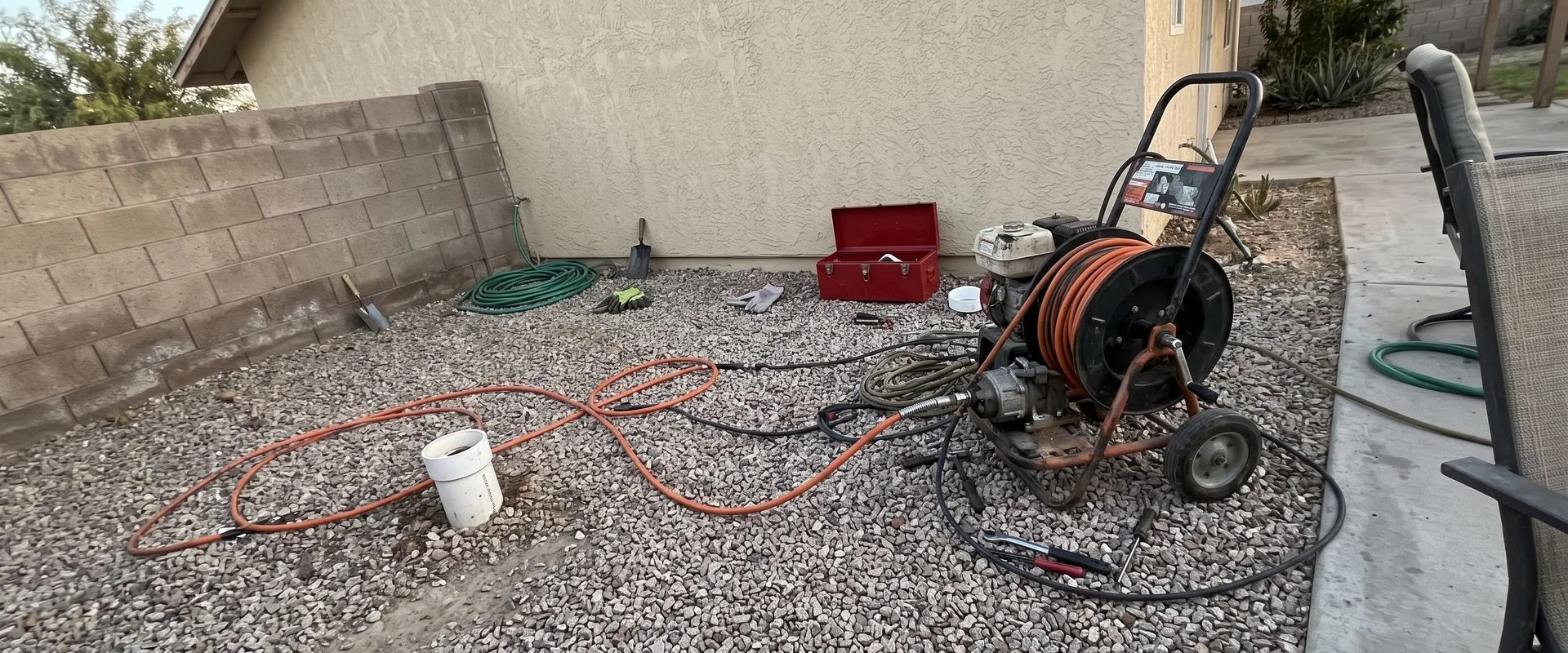
Cabling sends a rotating steel cable with a cutting head through the line. It punches through a blockage and restores flow. For a simple clog, that is all you need.
Hydro jetting pushes water at high pressure through a nozzle that scours the full inside of the pipe. It is the better tool when the problem is coating the walls rather than plugging one spot:
- Grease. It cools and clings, then narrows the line until one dinner closes it. A cable cuts a channel through it. Jetting takes the wall back to bare pipe.
- Mineral scale. Water at 18 to 22 grains per gallon leaves deposits inside drain lines too, especially on the hot side from dishwashers and laundry.
- Roots. Jetting cuts root masses back to the joint. The camera then shows whether the joint needs repair.
- Laundry sludge. Lint, detergent, and scale build a paste in standpipes, especially where older homes tie laundry into an undersized branch.
Why the Same Drain Keeps Coming Back
When clearing only resets the clock, the pipe has a structural defect. The most common ones:
- Bellies. A section of buried line has sagged, so it holds standing water and sediment.
- Offsets. Two pipe sections have shifted apart at a joint, leaving a lip that catches waste.
- Cracks and breaks. Debris snags on the edges, and roots find the opening.
- Collapsed sections. Usually old cast iron or clay that has given up entirely.
No amount of cabling fixes these. They need a camera to confirm, then a repair.
What a Sewer Camera Shows You
A self-leveling camera goes in through the cleanout and records the line as it travels. You see the screen yourself, along with the pipe material, any cracks or shifted joints, standing water, scale, or roots.
The camera head carries a small transmitter called a sonde. A locator above ground picks up its signal, so the exact spot and depth of a defect gets marked with paint on the surface. Any digging then happens in one place rather than across the whole yard. Sometimes the footage shows a healthy line and a one-time clog, which is a perfectly good answer to get.
Local Conditions That Are Hard on Sewer Lines
Several things about this area put extra strain on drains. Older grids like the Yuma Townsite still have clay laterals that mature trees have been working into for decades. Near irrigated farmland, soil moisture changes put pressure on buried lines and can create offsets over time. Then there is the winter rush: when the population swells between October and April, homes and RV resorts that sat idle all summer go back to full use, and weak lines show themselves quickly. Homes that sat empty in the heat can also have dried traps and settled sediment waiting.
Mistakes That Make Clogs Worse
- Pouring chemical openers down a stopped drain. They rarely clear a true blockage and leave caustic water in the trap.
- Running a disposal to “push through” grease. It just moves the grease further down the line.
- Clearing the same line over and over without a camera. You end up paying for the symptom several times.
- Ignoring gurgling. It is often the first warning before a main line backup.
Repair Options When Clearing Is Not Enough
If the camera confirms a failed section, there are generally two paths.
| Repair Method | Best For | Property Impact |
|---|---|---|
| Trenchless lining | Cracked or root-damaged pipe that still holds its shape | Minimal digging; driveways and landscaping stay intact |
| Excavation and replacement | Fully collapsed or badly offset lines | Trenching and surface restoration required |
A sound line with a temporary clog may simply need a good jetting. Request a free estimate, ask about any service call fee before booking, and you will get a plain explanation of which option fits. Our drain cleaning guides compare these approaches in more depth.
Drain clearing and camera inspection are available across Yuma, the Foothills, Somerton, San Luis, and Wellton. A backup coming into the house is a 24/7 call.