Hard-water specialists

Water Heater Repair Yuma: Gas, Electric and Tankless Units

Gas, electric, and tankless water heater repair and replacement in Yuma, including thermostats, elements, anode rods, flushing, and descaling built around 18 to 22 grain water.

Answered 24/7 English & Spanish Free estimate request All of Yuma County
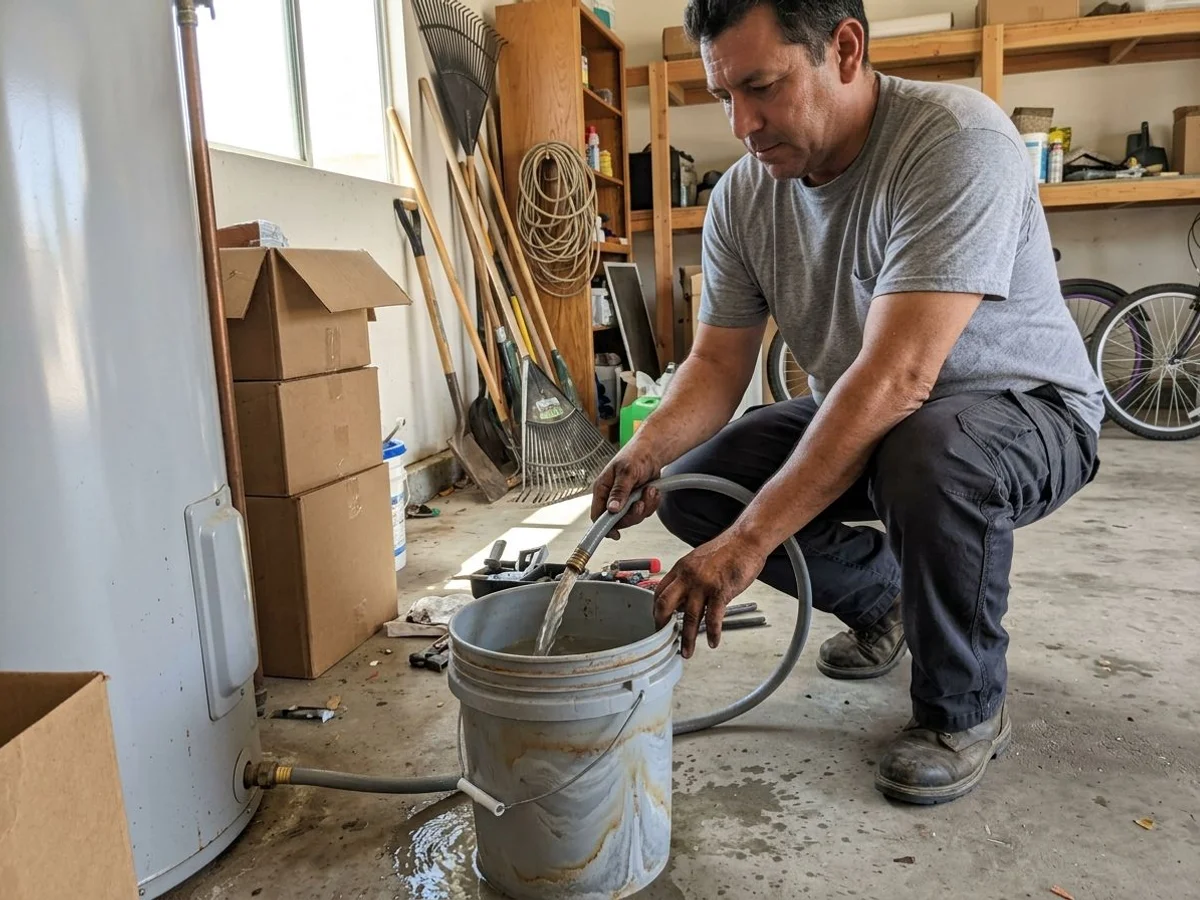
Plumber draining a water heater tank into a bucket in a Yuma garage
Serving all Yuma County
Answered 24/7
Nights, weekends, holidays
Free estimate request
No obligation to proceed
Se habla español
Atendemos en español

Water heaters across the country are rated to last somewhere around ten years or more. Around here, plenty of them do not get close. The reason is not bad luck or bad brands. It is what flows through them every day, combined with where they sit and how hot it gets.

Water heater repair in Yuma works best when the plumber starts by asking why the unit is struggling, not just which part is broken. Gas, electric, or tankless, the service covers thermostats, heating elements, pilot and gas control problems, anode rods, tank flushing, tankless descaling, and full replacement when that is the honest answer. Calls to Yuma Plumbing Pros are answered around the clock in English or Spanish and routed to a local plumber.

Why Heaters Wear Out Early in Yuma

The City of Yuma blends treated Colorado River water with groundwater and rates the result at 18 to 22 grains per gallon. Anything over about 10.5 is considered very hard, so local water sits at roughly double that line.

Each time the tank heats, calcium and magnesium come out of solution and settle on the bottom. That layer acts like insulation between the burner or lower element and the water. Burn cycles run longer, energy use climbs, recovery slows, and the steel at the bottom of the tank overheats and corrodes faster.

Then there is the heat. Many heaters sit in garages or on exterior walls that stay well above 100 degrees for months. Incoming supply water stays warm through the summer, so equipment that would coast in a mild climate gets pushed year round. Put those together and an early failure is the expected outcome, not a surprise.

Listen to the Tank: Symptoms and Likely Causes

  • Popping, crackling, or rumbling. Water trapped under sediment flashes to steam. This is a heavy scale layer announcing itself.
  • Hot water runs out sooner than it used to. Sediment is taking up tank volume, the burner is struggling through scale, or the dip tube has failed and cold water is mixing at the top.
  • Rusty water from the hot side only. The anode rod is likely spent and the tank is corroding internally. Treat this as a late warning.
  • No hot water at all. On gas units, a pilot, thermocouple, or gas control issue. On electric units, a tripped high-limit switch, a burned element, or a failed thermostat. These are often repairs, not replacements.
  • Moisture at the base. Could be a loose fitting, a relief valve doing its job, or a tank that has started to fail. It needs testing before anyone condemns the heater.
  • Tankless error codes. Scale-related codes on brands like Rinnai or Navien usually mean the heat exchanger is choking and overdue for descaling.

Repair or Replace? How the Call Gets Made

ConditionUsual Recommendation
Younger unit, failed element, thermostat, or thermocoupleRepair the part
Popping tank with moderate scale, no leaksFlush and check the anode
Rust in hot water and a spent anode on an older tankPlan a replacement soon
Water seeping from the tank bodyReplace
Tankless unit throwing scale codesDescale and set a maintenance schedule

You should see the condition for yourself: the sediment that comes out in a flush, the state of the anode rod, the corrosion at the fittings. Request a free estimate and ask about any service call fee before booking.

Tankless Units Need a Different Maintenance Calendar

Tankless heaters are efficient and long-lived when cared for, but they are unforgiving in hard water. Water passes through narrow heat exchanger passages at high temperature, exactly where scale forms fastest. Manufacturer intervals are written for average water, and local water is far from average.

Most tankless units here need descaling at least annually, and heavy-use homes may need it every six months. The process circulates a descaling solution through the heat exchanger with a small pump, then flushes and cleans the inlet screen. Units installed without any water treatment, which is common in newer subdivisions such as Cielo Verde, tend to show trouble within a few years if nobody has been told about this schedule.

Seasonal Tips for Garage and Exterior Units

  • Before summer: Flush the tank and test the relief valve. A heater already fighting scale handles a 110 degree garage poorly.
  • If you leave for the season: Close the cold supply, set gas units to vacation or pilot, or switch electric units off at the breaker.
  • When you return in the fall: Look for moisture or rust at the base before restarting, and listen for popping during the first heat cycle.
  • Every few years: Pull and check the anode rod. Replacing a spent rod is one of the cheapest ways to extend tank life.

What a Proper Replacement Includes

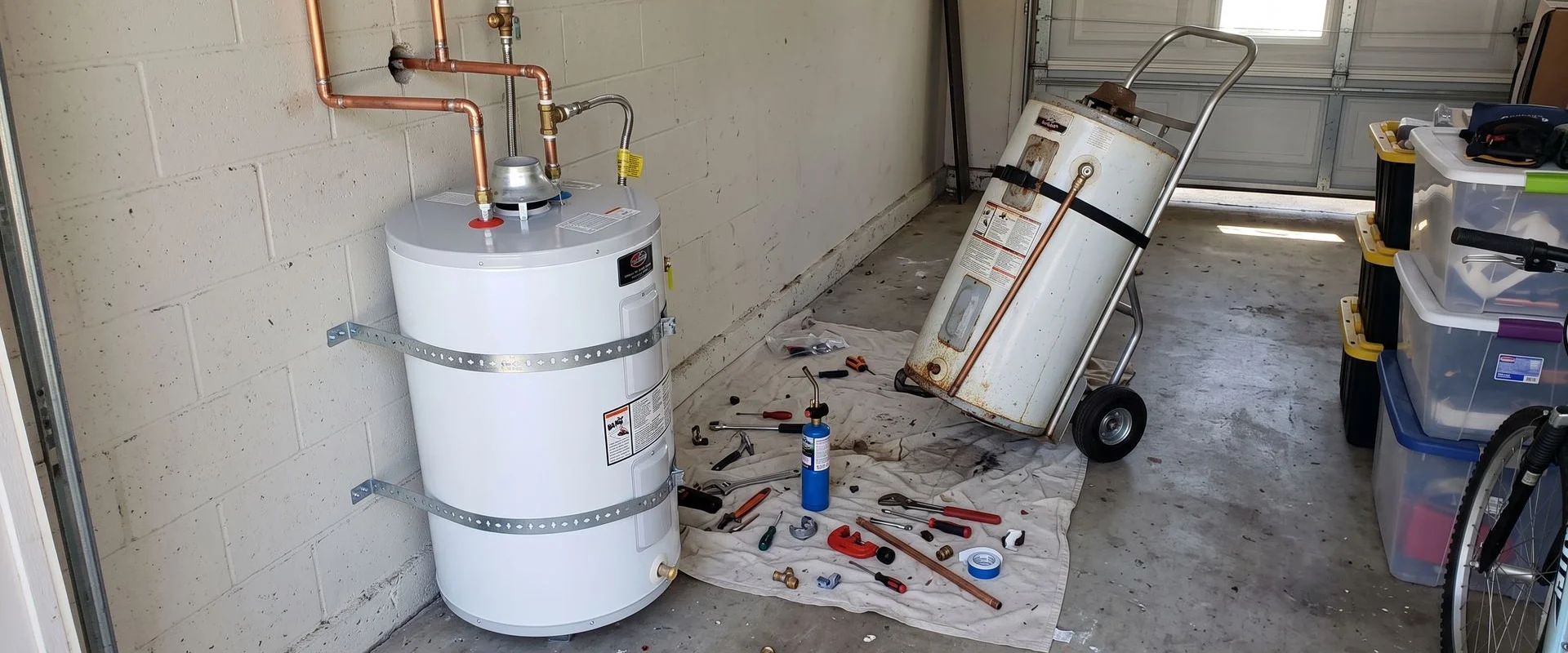
When replacement is the right call, sizing matters more than the brand on the box. Capacity gets matched to how many showers run back to back, whether laundry and the dishwasher overlap, and the recovery loss scale causes over time.

  • A permit: The City of Yuma requires one for water heater replacement.
  • Thermal expansion control: An expansion tank where the system is closed, so pressure has somewhere to go.
  • Correct relief valve discharge: Piped to an approved location, not left pointing at the floor.
  • Venting and connections: Proper flue for gas units, new flex connectors, and secure strapping.
  • Haul-away: The old unit leaves with the plumber.

After the install, a flushing and anode schedule keeps the new heater from following the old one. If untreated water is what wore out the last unit, a softener upstream is worth discussing. Our water heater guides explain the failure process in more detail.

Water heater service is available throughout Yuma, the Foothills, Somerton, San Luis, and Wellton. If a tank is leaking right now, shut off the cold supply and the gas or power, then call.
The difference

Why choose us for water heaters

Planned around local hardness

The City of Yuma rates its water at 18 to 22 grains per gallon. Every sizing, flushing, and descaling recommendation starts from that range.

Scale diagnosis, not guesswork

Popping and rumbling are sediment. Rust on the hot side is internal corrosion. You find out which failure you actually have.

Tankless done properly

Tankless units here need descaling far more often than the manual suggests. They get serviced on a realistic interval.

Right-sized replacements

Capacity matched to the household, with the expansion tank, straps, venting, and permit handled to local plumbing standards.

Emergency tank failures

A leaking tank is a 24/7 call. Fifty gallons on a garage floor does not wait for business hours.

The treatment conversation

If untreated water is what killed the last heater, you will hear that plainly, along with what a softener upstream would change.

Step by step

How our water heaters work goes

  1. 01

    Symptom check

    Popping, rust on the hot side, running out sooner than it used to, moisture at the base. Each one points somewhere different.

  2. 02

    Inspect the tank

    Age, scale load, anode condition, T&P valve, connections, and venting. The whole install gets checked, not just the complaint.

  3. 03

    Repair or replace, honestly

    A young unit with a bad element gets a part. A scaled, corroding tank past its rated life gets replaced. You see which one you have.

  4. 04

    Set up maintenance

    Flushing interval, anode checks, and for tankless units a descaling schedule matched to 18 to 22 grain water rather than the manual.

Get a free estimate before anything is scheduled

Call and describe the problem. We triage it over the phone, quote it honestly, and there are never surprises when the truck shows up.

Side by side

How we compare

Feature Typical provider Yuma Plumbing Pros
Failure diagnosis Replace and move on Identify the scale or corrosion cause first
Hard-water context National average assumptions Sized and scheduled for 18 to 22 gr/gal
Tankless descaling Rarely mentioned Scheduled service on a local interval
Anode service Not offered Checked and replaced to extend tank life
Leaking tank after hours Next business day 24/7 call answering and routing
On the job

Our water heaters work

Click any photo to enlarge.

Common questions

Water Heaters FAQs

Why do water heaters wear out so fast in Yuma?

Mostly scale. At 18 to 22 grains per gallon, calcium and magnesium drop out of the water inside the tank and pile up on the bottom. That layer keeps the burner's heat from reaching the water, so the steel runs hotter and corrodes faster. Garages that bake through the summer add to the strain.

What does a popping or rumbling tank mean?

Water trapped beneath a layer of sediment flashes to steam and bubbles out, which makes the noise. It is a direct sign of scale on the tank bottom. A flush often quiets a tank caught early. Left alone, that overheating speeds up tank failure.

How do I decide between repair and replacement?

A newer unit with a bad thermostat, element, pilot assembly, or relief valve is worth fixing. A tank near or past its rated life with heavy scale, rusty hot water, or moisture at the base is usually worth replacing. You will be shown the condition so the choice is yours.

How often should I flush my tank?

More often than the label says. Once a year is a sensible baseline in local water, and busy households may benefit from twice a year. If it has never been flushed, the first one reveals a lot about the tank's condition.

How often does a tankless heater need descaling here?

Usually at least once a year, and more often for heavy use. The narrow passages in a tankless heat exchanger scale up quickly in hard water. Skipping it costs efficiency, then triggers error codes, then shortens the unit's life. A softener upstream stretches the interval.

Should I turn my water heater off when I leave for the summer?

Many part-year owners do. Close the cold supply, set a gas unit to vacation or pilot, or switch off the breaker on an electric unit. When you return, check for moisture at the base before restarting, and flush it if it has been a few seasons.

Does a water heater replacement need a permit in Yuma?

Yes. The City of Yuma requires a permit for water heater replacement, processed through its Community Development department. Ask whoever does the work whether the permit is included.

Is rusty hot water a bad sign?

Usually. If rust shows up only on the hot side, the tank is likely corroding from the inside, often because the anode rod is used up. That is frequently the last warning before a leak.

What should I do if my water heater is leaking right now?

Close the cold supply valve on top of the heater, turn off the gas or the breaker, and call Yuma Plumbing Pros at 928-756-0095. The line is answered 24/7 in English and Spanish.

Still have a question?

Call and describe it. We triage over the phone before anyone is dispatched.

Call 928-756-0095
Read first

Guides on water heaters

How Often to Flush a Tankless Water Heater in Yuma's Hard Water

At 18 to 22 grains per gallon, factory descaling intervals are too long. A schedule by household, scale warning signs, and how a softener helps.

Read the guide

Is My Water Heater Going Bad? 6 Warning Signs to Act On

Less hot water, rust on the hot side, popping, moisture at the base, a climbing gas bill: what each sign means, how urgent it is, and repair vs replace.

Read the guide

Is Replacing the Anode Rod Worth It in Yuma's Hard Water?

What the sacrificial anode does, how fast 18 to 22 grain water eats it, magnesium vs aluminum vs powered rods, and when a new rod beats a new tank.

Read the guide

Repair or Replace Your Water Heater? A Yuma Decision Guide

Which symptoms mean repair and which mean replace, how hard water changes the math, the 50 percent rule adjusted for Yuma, and what a good inspection covers.

Read the guide

Tankless vs Tank Water Heater: Which Holds Up in Yuma's Hard Water?

How tank and tankless heaters each fail in 18 to 22 grain water, upfront vs ongoing cost drivers, sizing with warm inlet water, and a decision checklist.

Read the guide

Water Heater Popping or Rumbling? What the Noise Means in Hard Water

Popping and rumbling means scale on the tank bottom. Water heater noises decoded, why Yuma tanks get loud early, the risk, and flush vs replace.

Read the guide

Why Water Heaters Fail Early in Yuma

Hard-water scale, summer heat, and idle seasonal homes: why Yuma heaters fall short of their rated life, the warning signs, and what extends it.

Read the guide
Plumber loading tools into a service van at dusk in Yuma
Answered 24/7, English & Spanish

Need water heaters in Yuma County?

Call and describe what is happening. Your call is answered in English or Spanish at any hour, and the estimate is free.

Free estimate request All of Yuma County Se habla español
928-756-0095