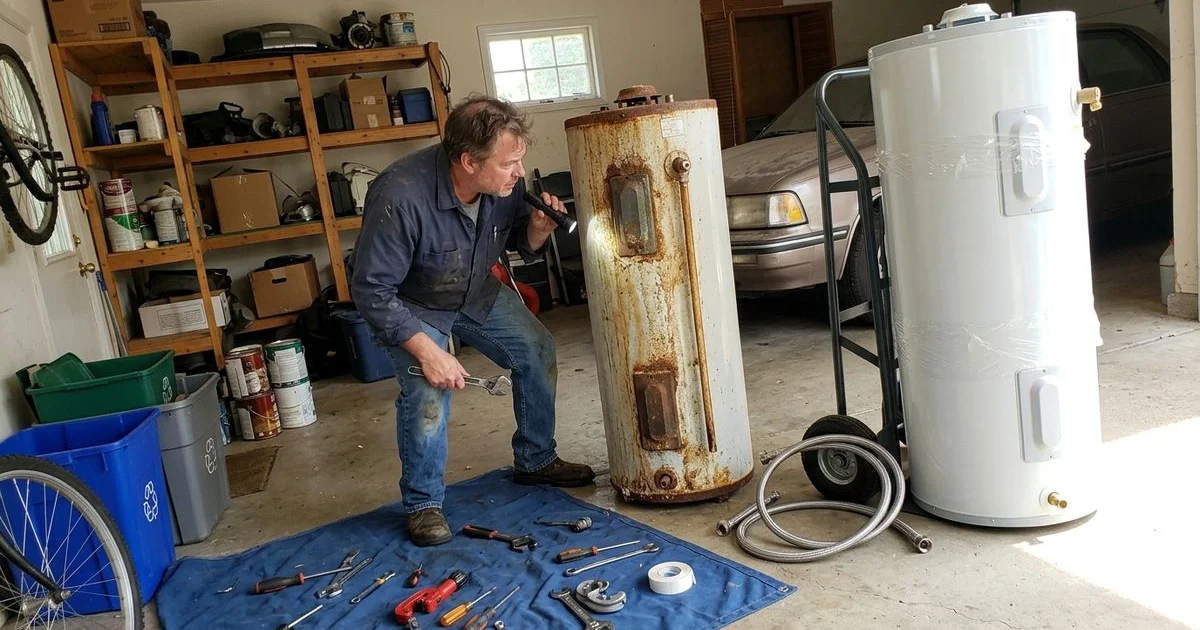
When your water heater acts up, the question is simple: fix it or replace it? The answer usually is too, once you know what to look at. This guide covers clear replace signs, clear repair signs, and how to handle the borderline cases, adjusted for what Yuma’s hard water does to tanks.
The quick rule
The tank is the expensive, non-repairable part. If the tank itself is failing, through a leak or internal rust, replace the unit. If a part attached to the tank has failed, repair it, as long as the tank has life left.
Symptom by symptom
| Symptom | Usually | Why |
|---|---|---|
| Water leaking from the tank shell or bottom seam | Replace | Corroded-through steel cannot be patched |
| Rust in hot water only (cold runs clear) | Replace soon on an older tank | Internal corrosion; anode likely gone |
| Older tank, heavy scale, drain valve clogged with mineral | Replace | Cannot be maintained, steel has been overheating |
| Two or more significant repairs in a year | Lean replace | Pattern of a failing unit |
| No hot water, no leak (gas) | Repair | Pilot, thermocouple, or gas control |
| No hot water, no leak (electric) | Repair | Element, thermostat, or high-limit switch |
| Too hot or too cold | Repair | Thermostat |
| Runs out fast on a younger tank | Repair | Often a broken dip tube, or sediment that a flush can clear |
| Dripping relief valve | Repair | Failed valve or high pressure; may need an expansion tank |
| Popping, no other symptoms | Flush and reassess | Sediment; a flush often fixes it on a younger tank |
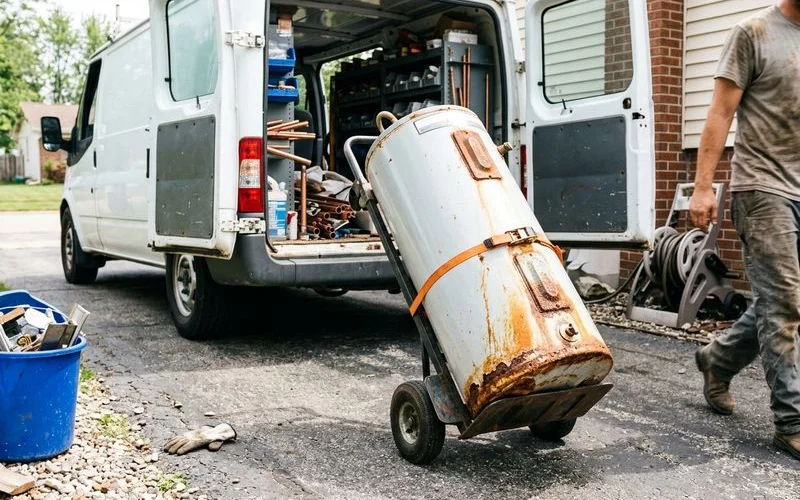
The 50 percent rule, adjusted for local water
A common industry rule says: if a repair approaches half the cost of a new installed heater, replace instead. That is a reasonable starting point. Two local adjustments make it more useful here.
1. Count remaining life, not age. A repair on a tank with years left is an investment. The same repair on a tank near the end is a down payment on a replacement you will need soon anyway.
2. Shorten the expected life for hard water. The City of Yuma rates its water at 18 to 22 grains per gallon. Unless the tank has been flushed regularly and the anode serviced, assume it has less life left than the label suggests. Heaters in hot garages lean further that way.
Planned beats emergency
A planned replacement happens on a weekday, with the unit you chose, permit arranged. An emergency replacement happens after the tank has emptied onto the garage floor, at whatever hour, with whatever is in stock. When a tank is clearly near the end, choosing your own timing is worth a lot.
What a good inspection covers
When a plumber looks at your heater to make this call, expect them to check:
- Age from the data plate.
- Sediment by draining a little water and seeing what comes out.
- Anode condition, if accessible, to judge how protected the steel has been.
- Corrosion at fittings, the relief valve, and the bottom seam.
- Relief valve and expansion tank, including whether system pressure is too high.
- Venting and combustion air on gas units.
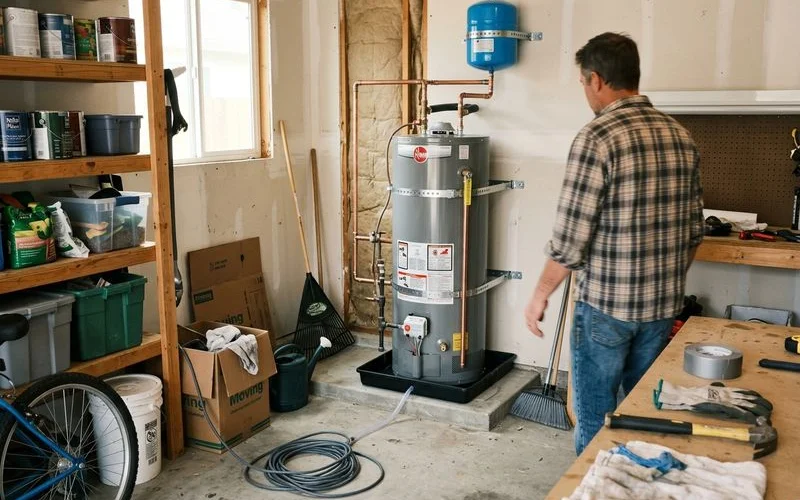
- The original install, including connections, drain pan, and strapping.
You should get both options explained, with reasons. A recommendation with no explanation is not a diagnosis.
If you are replacing
Choose the type. Tank or tankless is a real decision in hard water, and our guide on tank vs tankless covers it.
Decide on water treatment. If the old heater died of scale, a new one on the same untreated water starts the same clock. A softener, or at least a strict flush and anode schedule, is what gets the new unit to its rated life.
Confirm the permit. Water heater replacement requires a permit in the City of Yuma. Ask whether it is in the estimate.
Getting a clear answer
Our water heater repair and replacement service handles gas, electric, and tankless units. Call Yuma Plumbing Pros at any hour, in English or Spanish. Tell the assistant the heater’s age, fuel type, and what it is doing, and a local plumber gets those details before arriving. Request a free estimate and ask about any service call fee before booking.