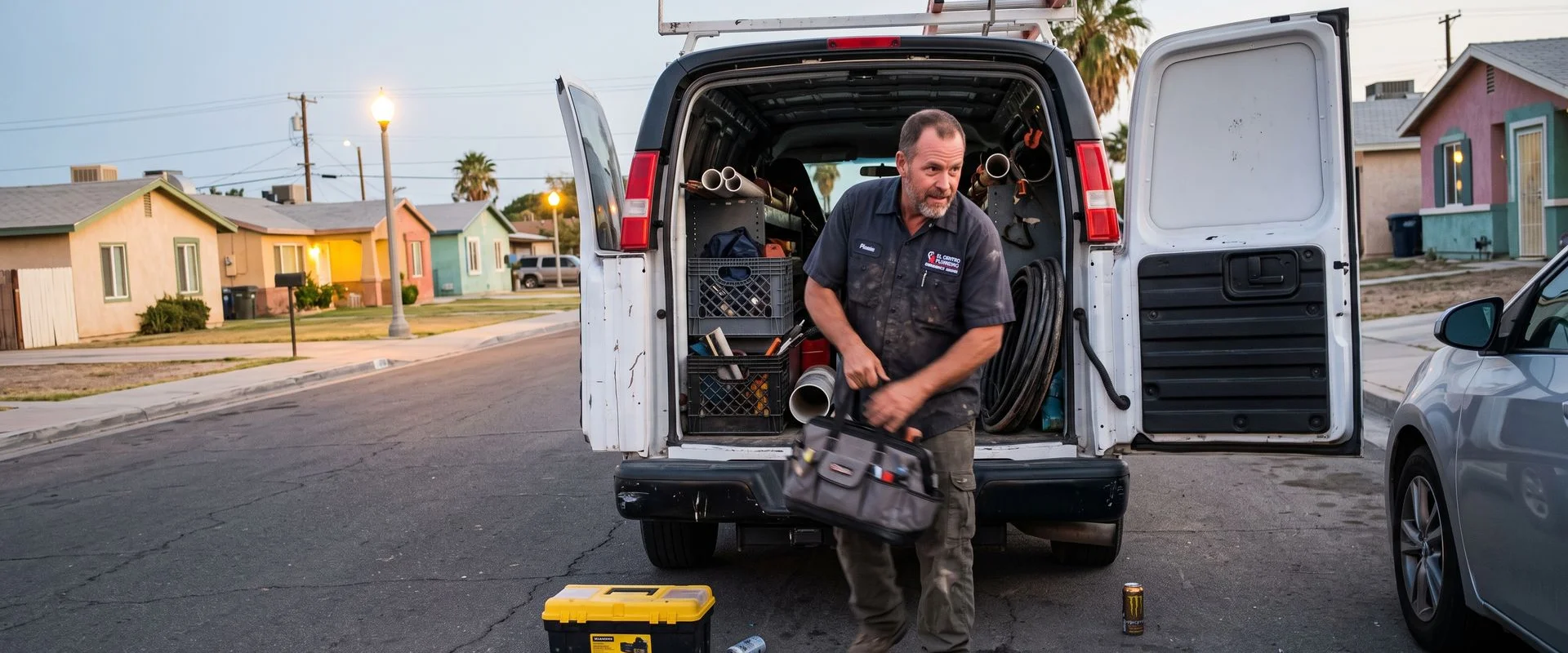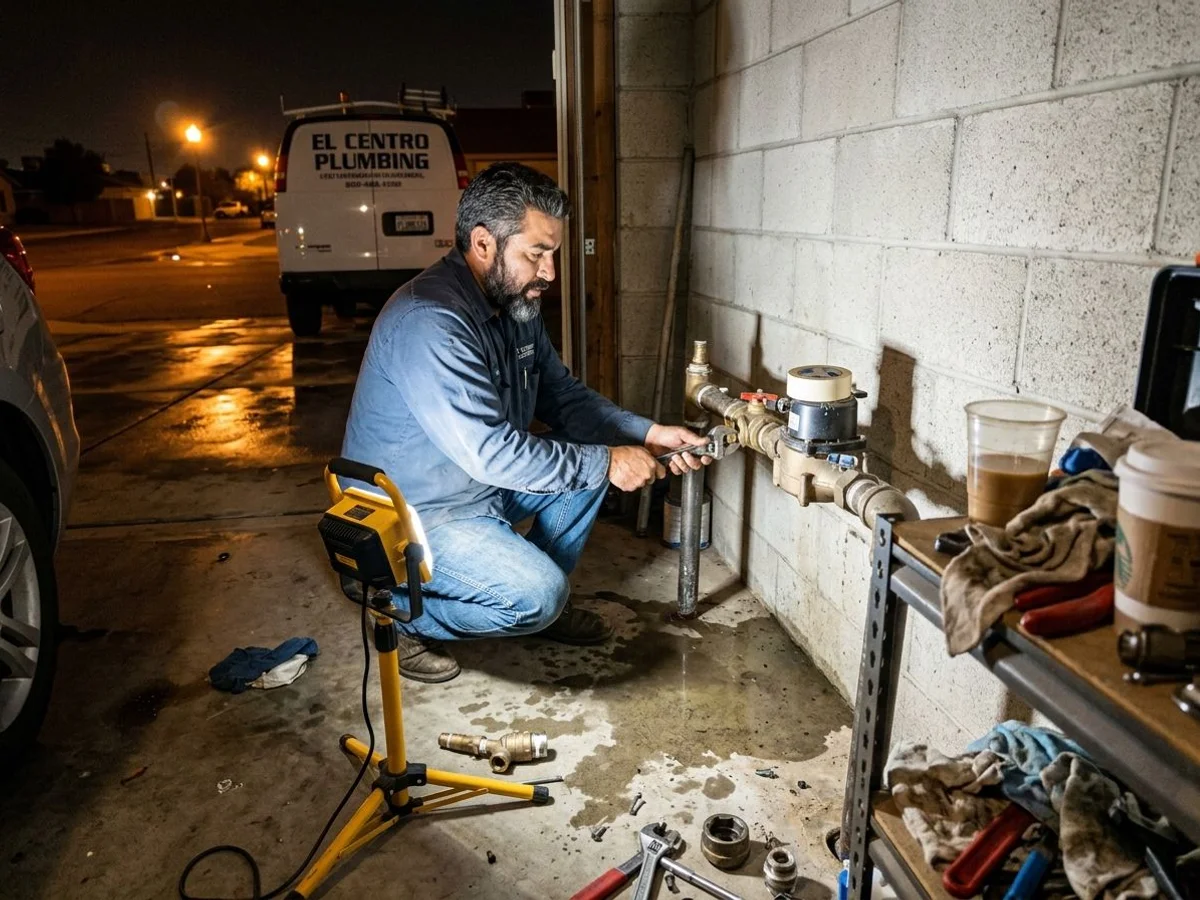
Plumbing emergencies rarely happen at a convenient hour. A supply line splits behind the washer on a Sunday night. A water heater gives out in the middle of August. Sewage comes up through the shower drain while the house is full of guests. What you need in that moment is simple: somebody picks up the phone, understands the problem, and gets a plumber moving.
That is what this line is for. When you need an emergency plumber in Yuma, your call is answered at any hour by an automated bilingual assistant, in English or Spanish. It writes down exactly what is happening and routes it to a local plumber. No voicemail, no message sitting in a queue until morning.
Below is what to do in the first few minutes, how to decide whether a problem truly cannot wait, and what to expect once you call Yuma Plumbing Pros.
Stop the Water First: A Five-Minute Checklist
Most of the damage in a plumbing emergency comes down to how long water keeps running. A broken half-inch supply line under full pressure can put out several gallons a minute. Every minute you shave off matters more than anything the plumber does later.
- Find the main shutoff. In most local homes it is near the front hose bib, in the garage where the supply enters, or at the meter box by the street. Manufactured homes often have a valve under the home near the supply riser.
- Close it the right way. A ball valve takes a quarter turn so the handle sits crosswise to the pipe. An older gate valve takes several clockwise turns. If it will not move, stop. Do not use a cheater bar.
- Make the area electrically safe. Turn off breakers feeding outlets, appliances, or lights near the water before you step into it.
- Bleed the pressure. Open the lowest faucet in the house, often a tub spout or an exterior hose bib, to drain what is left in the lines.
- Handle the water heater if it is involved. Close the cold supply valve on top and shut off the gas or the breaker.
Once the water is off, call and say so. A house with the main already closed gets handled differently from one that is still flooding, and the plumber packs different equipment for each. Our guide to shutting off your water shows where the valve usually hides.
Is It an Emergency or Can It Wait Until Morning?
Not every plumbing problem needs a truck at midnight. Here is a straightforward way to sort it out.
| Situation | Call Now? | Why |
|---|---|---|
| Leak you cannot stop, or a burst pipe | Yes | Water damage grows by the minute |
| Sewage coming up through a tub, shower, or floor drain | Yes | The main line is blocked downstream of everything |
| No water anywhere in the house | Yes | Could be a failed valve, regulator, or a break on your side |
| Strong sewer gas smell indoors | Yes | Gas is escaping into living space |
| Water heater leaking or the relief valve discharging nonstop | Yes | A failing tank can dump its full volume |
| One slow drain, a drip, or a running toilet | Usually not | Safe to book for daytime |
If you are unsure, call anyway. Describing the situation takes a couple of minutes, and the triage will tell you whether it needs a plumber tonight.
The Emergencies That Show Up Most in Yuma
Emergency calls here follow the local climate and housing stock closely. Four patterns account for a large share of after-hours work.
Summer water heater failures
The city rates its own water at 18 to 22 grains per gallon. That mineral load settles on the bottom of tank heaters as scale, which overheats the steel and shortens tank life by years. When July pushes past 110 degrees and the heater sits in a hot garage, a tank that was already weak often gives out. Leaking tanks and failed relief valves are among the most common summer calls.
Main line backups in older neighborhoods
Older grids such as the Yuma Townsite still carry clay and cast iron sewer laterals, and mature trees send roots into loose joints. When the main lateral closes, every drain in the house backs up at once, usually through the lowest fixture. Stop running water immediately so you are not adding to what is coming up.
Leaks discovered in empty winter homes
Thousands of homes sit empty from spring through fall. A failed supply line or a toilet fill valve can run for weeks before a neighbor notices water under the garage door. Out-of-town owners can call, describe what their neighbor or property manager is seeing, and give a local contact for access.
Seized shutoffs and no water
Hard water crusts old gate valves until they will not close, and that usually gets discovered in the middle of a leak. Loss of water to the whole house can also come from a failed pressure regulator or a break between the meter and the home. A stuck valve is typically replaced with a quarter-turn ball valve so the next shutoff actually works.
What the Phone Triage Covers
When the assistant answers, it asks a short set of questions:
- What is happening right now, and where in the house?
- How long has it been going on?
- Is the main water currently off?
- Is it one fixture or every fixture?
Those answers shape the whole job. Pressure lost at every tap and a single leaking angle stop need different parts. A backup at every drain means the main lateral, so the plumber brings a drain machine and camera instead of a hand auger. The questions and the routing are the same whether you call in English or Spanish.
Fees, Estimates, and What to Ask Before Booking
Emergency work is stressful enough without surprises at the door. You can request a free estimate, and you should ask about any service call or after-hours fee on the phone before booking. It is also reasonable to ask what the plumber will do first to stop the damage, and whether the permanent repair can be scheduled separately once things are stable. Arizona homeowners can also check a contractor’s status through the Registrar of Contractors before work begins.
Emergency calls are handled across Yuma and the surrounding communities, including the Foothills, Somerton, San Luis, and Wellton. If water is running right now, close the main and call.