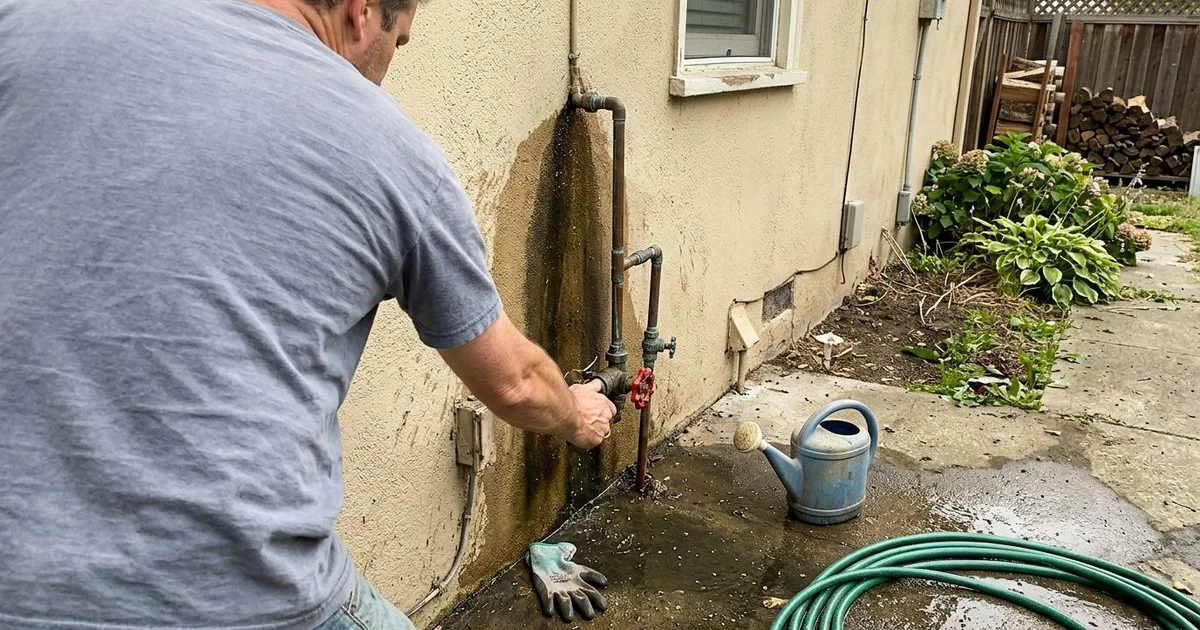
When a pipe bursts, it is a race against volume. A broken supply line can push many gallons a minute onto your floor, so what you do in the first five minutes decides whether this is a mop-and-fan cleanup or a tear-out. Here is the sequence, minute by minute.
Minute 0 to 1: Shut the water off
Go straight to the main valve. In most Yuma homes it is where the supply line enters the house: the street-facing wall near a hose bib, in the garage, or near the water heater. In a manufactured home, check underneath near where the line rises out of the ground.
| Valve type | How to close it | Watch out for |
|---|---|---|
| Lever (ball valve) | Quarter turn, lever across the pipe | Usually easy and reliable |
| Round wheel (gate valve) | Clockwise, several turns | Old ones seize; do not force |
If the wheel will not turn with normal hand pressure, stop. Hard-water scale cements old gate valves, and forcing one can snap it. Go to the meter box at the curb and close the valve on the house side of the meter.
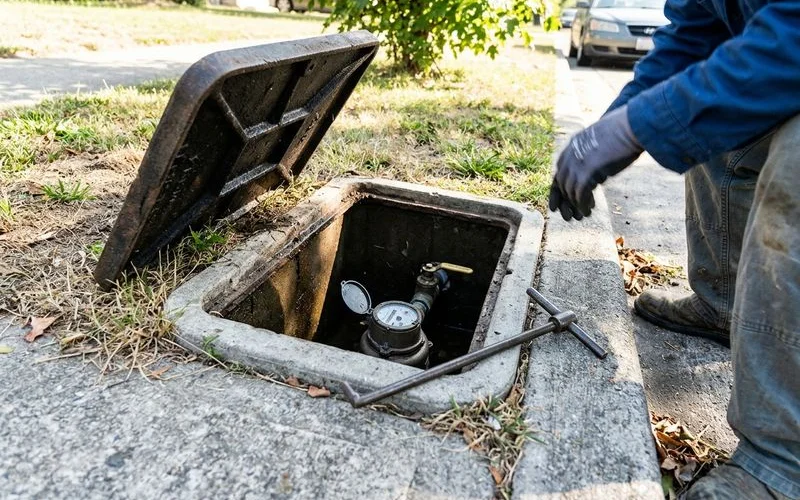
Cannot find either valve? Call emergency plumbing at 928-756-0095. The line is answered around the clock in English and Spanish, and you can describe what you are seeing while you look. On a calm day later, read how to shut off your water so you are ready next time.
Minute 1 to 2: Cut power near the water
If water is spreading toward outlets, power strips, the washer, or the water heater, switch off those circuits at the breaker panel, but only if you can reach the panel from somewhere dry.
Do not wade in
If you would have to walk through water to reach the panel, do not. Get everyone out of the room and call. No rug is worth the risk.
Minute 2 to 3: Drain the lines
Closing the main does not empty the pipes. They are still full and under pressure.
- Open the lowest faucet: an outdoor hose bib, a laundry sink, or a tub.
- Then open one or two other faucets to let air in, so the lines drain fast.
Water heater: leave it alone unless it is the source. If it is the source, close the cold inlet valve on top, then turn the gas control to off or flip its breaker.
Minute 3 to 5: Protect what you can
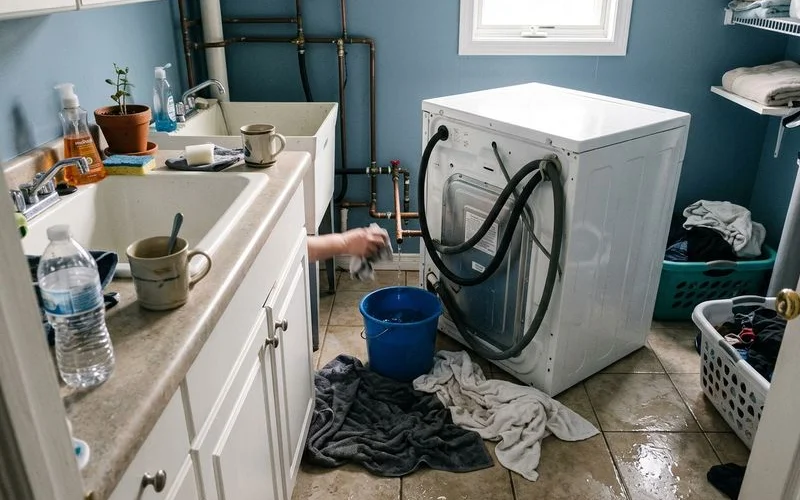
- Buckets under drips, towels along the edge of the spreading water.
- Lift rugs, cardboard boxes, and electronics off the floor.
- Take photos and video before you clean up: the water, the broken pipe, and anything damaged. Your insurer will want them.
- Open windows and run fans. Dry desert air helps a lot in the first few hours.
- Do not cut into wet drywall yourself. The plumber needs to see the pipe first.
Minute 5: Make the call
When you call Yuma Plumbing Pros, an automated bilingual assistant answers and asks:
| Question | Example answer |
|---|---|
| Where is the water? | “Coming through the hallway ceiling” |
| How long has it been running? | “About 15 minutes” |
| Is the water off? | “Yes, I closed the main” |
| One fixture or the whole house? | “Whole house, I shut off the main” |
Add anything else you know: the pipe material, whether the house is on a slab, and especially whether you have had other pinhole leaks recently. More than one leak in a year or two usually means the pipe system itself is wearing out, which changes what the plumber recommends.
If you are not home
Many Yuma homes sit empty part of the year. If a neighbor calls you about water coming out from under the garage door, ask them to close the main if they can reach it safely, then call from wherever you are. Give the assistant the neighbor’s or property manager’s name and number for access.
Request a free estimate when you call, and ask about any service call fee or after-hours rate before booking.