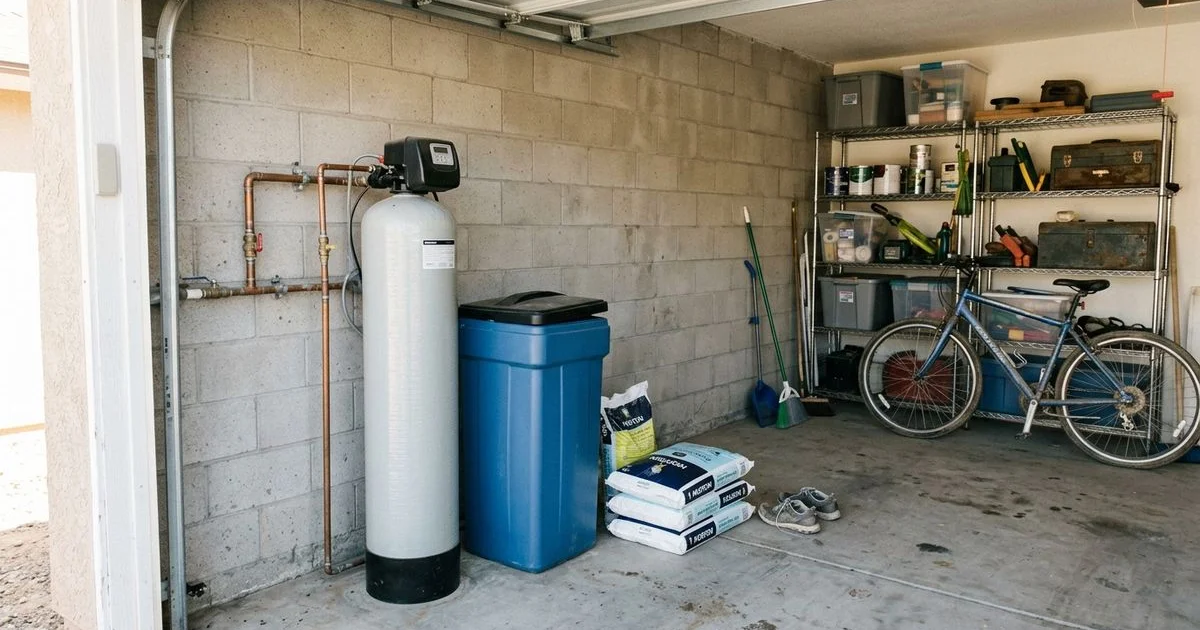
On a soft-water system, a softener that is a bit too small or too big is a minor inefficiency. On water rated at 18 to 22 grains per gallon, sizing decides whether the unit protects your water heater or quietly lets hard water through. This guide walks through the math and helps you see where your household fits.
The formula
You need three numbers:
- People in the home × gallons per person per day = daily water use
- Daily water use × hardness in grains per gallon = grains removed per day
- Grains per day × days between regenerations = capacity needed, plus a margin
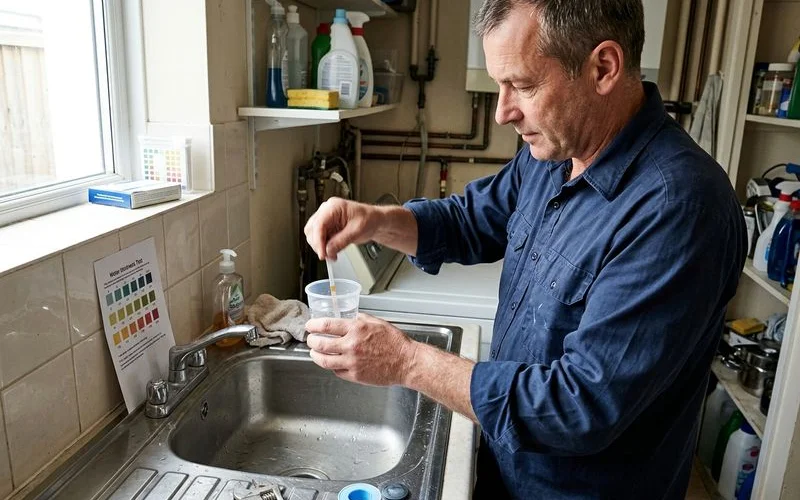
A common planning figure is about 75 gallons per person per day, though households vary. For hardness, the City of Yuma tells residents to set softeners for 18 to 22 grains. Using 20 as a middle value is a reasonable start for city water.
A worked example
A household of four on city water:
- 4 people × 75 gallons = 300 gallons a day
- 300 gallons × 20 grains = 6,000 grains a day
- Regenerating about every 5 to 7 days = 30,000 to 42,000 grains of usable capacity
Softeners do not deliver their full rated capacity at efficient salt settings, so this family usually lands on a unit rated around 40,000 to 48,000 grains.
Starting points by household
| Household | Approx. grains per day at 20 gpg | Common starting size |
|---|---|---|
| 1 to 2 people | 1,500 to 3,000 | 24,000 to 32,000 grains |
| 3 to 4 people | 4,500 to 6,000 | 40,000 to 48,000 grains |
| 5 to 6 people | 7,500 to 9,000 | 48,000 to 64,000 grains |
| Large or high-use household | 10,000+ | 64,000+ grains or twin-tank |
| Winter home, 2 people part of the year | 1,500 to 3,000 while occupied | 24,000 to 32,000 grains, metered valve |
These are starting points, not final answers.
Who needs to size up, and who can size down
Size up if:
- You have a tankless water heater downstream
- Long showers, frequent laundry, or a large family are the norm
- Teenagers live at home
- Guests stay for weeks at a time in winter
- Your tap tests above the city range
Size down, or at least do not oversize, if:
- One or two people live in the home
- The house is a part-year winter home
- You travel often
- Your tap tests lower than the city range (some homes outside the city system)
Test first, do not guess, if:
- You are outside the city water system
- You inherited a softener with the house and do not know its size or settings
What getting it wrong looks like
| Undersized | Oversized | |
|---|---|---|
| Regeneration | Every night, sometimes more | Rarely |
| Hard water breakthrough | Yes, between cycles | No |
| Salt use | High | High per cycle, and wasteful |
| Resin life | Shortened | Resin sits idle and can degrade |
| Water heater protection | Inconsistent | Fine, but you paid for unused capacity |
The tell
If your softener regenerates every single night, it is undersized for your household. That is worth checking on any system that came with the house.
Metered vs timer control valves
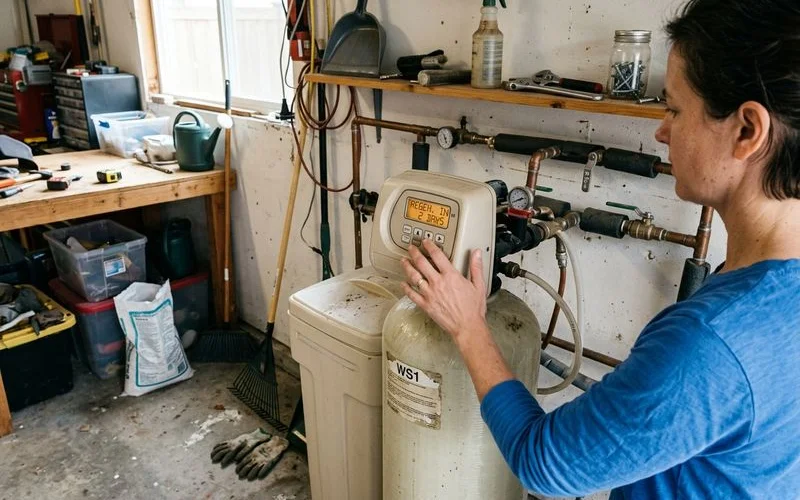
- Metered (demand) valves regenerate based on water actually used. They suit households with uneven use, like winter homes, guests, and travel.
- Timer valves regenerate on a fixed schedule whether you used the water or not. They waste salt in light weeks and run short in heavy ones.
At this hardness, a metered valve is the better choice for most homes. Regeneration usually runs overnight and takes a couple of hours, during which the house briefly gets untreated water.
Salt and placement
Expect to add salt every few weeks. Put the brine tank where you can reach it with a 40-pound bag without moving the car, because that decides whether it gets refilled. Our guide on is a water softener worth it weighs those costs against what untreated water does.
Our water softeners and reverse osmosis service sizes equipment from a test at your tap and a conversation about how your household uses water. Call Yuma Plumbing Pros any hour, in English or Spanish, for a free estimate. Ask about any service call fee before booking.